
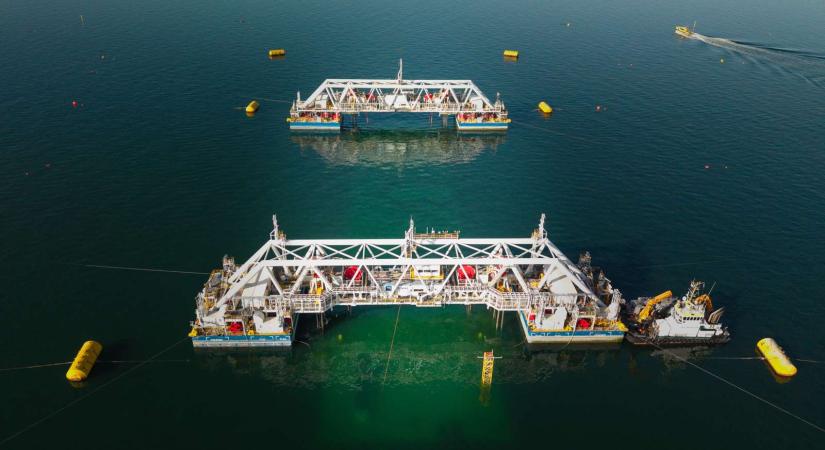
The second tunnel element for the Fehmarnbelt Fixed Link has now been successfully installed.
The operation began on the evening of Tuesday, 23 June, when the tunnel element was towed out from the construction site. Five tugboats pulled the 73,500-tonne concrete element to the tunnel trench, where it was precisely positioned using a system of steel wires.
The immersion began during the night of Friday, 26 June, and by Saturday morning the element had been placed on the seabed, according to Sund & Bælt.
While the first element was installed at the tunnel portal, the new element had to be connected to the previous element, which was immersed in May. With two elements now in place, more than 500 metres of the 18-kilometre tunnel have been completed.
A highly complex operation
"Although this is the second time we have immersed a tunnel element, it remains a highly complex operation that requires our full attention every time. As our contractors gain more experience with the process and equipment, we expect to increase the pace of construction," says Lasse Vester, Deputy Project Director at Sund & Bælt.
The Fehmarnbelt Tunnel will consist of a total of 89 concrete elements, all manufactured at Northern Europe's largest construction site in Rødbyhavn on the Danish island of Lolland. Each element is as large as a cargo ship, and like ships, each tunnel element is given its own name.
The element is named Lund
The Fehmarnbelt Fixed Link is a key part of the future Trans-European Transport Network (TEN-T). For that reason, every tunnel element is named after a European city located along the transport corridor stretching from Malta in the south to Finland in the north. This element has been named after the Swedish city of Lund.
Over the coming days, the sides of the element will be covered with rocks and gravel to ensure it remains securely fixed in the tunnel trench.
Preparations will then begin for the immersion of the next tunnel element.