New analysis paints a positive picture of development along the Oslo–Hamburg axis

femern.-portal-femern-belt-development

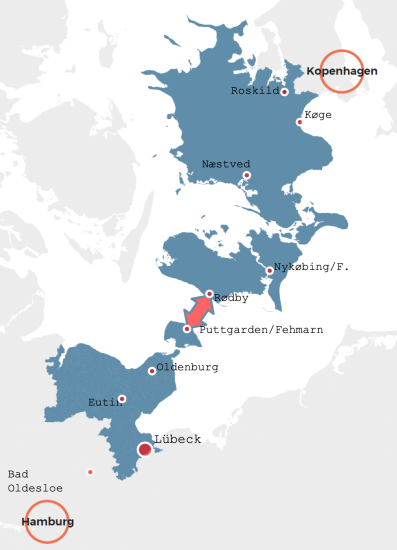
The STRING region, stretching from Oslo via Copenhagen to Hamburg, is performing better economically and demographically than other comparable regions in Norway, Sweden, Denmark and Germany.
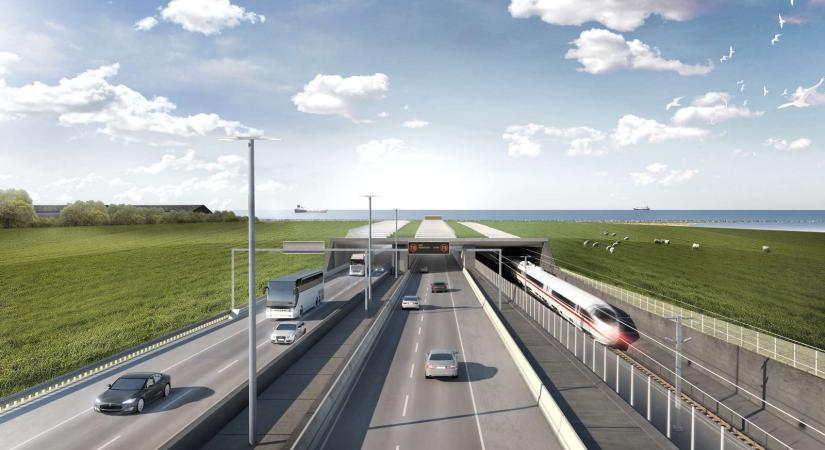
The upcoming fixed Fehmarnbelt connection will further strengthen development opportunities.

This is the conclusion of a new analysis from the Kiel Institute for the World Economy.

The major cities of Hamburg, Copenhagen and Oslo benefit from the development. At the same time, rural areas in Schleswig-Holstein, southern Denmark and southern Sweden also gain.

“Development in the STRING region is driven by growth in the metropolitan areas. Less densely populated areas benefit from being connected to these centres,” says Dr Robert Gold, co-author of the analysis.

Metropolitan areas drive growth
The analysis from the Kiel Institute shows that Hamburg, Copenhagen and Oslo are growing significantly above average in terms of economic output, employment and productivity. This development extends far beyond the surrounding regions.

Schleswig-Holstein benefits from its connection to Hamburg and the fast-growing Scandinavian cities.

In southern Denmark, job opportunities and business activity are improving along the Fehmarnbelt corridor between Copenhagen and the German border, the analysis concludes.

Improved transport connections within the STRING region and to other economic centres in Europe are crucial for this development.

“The Fehmarnbelt connection can make a significant contribution if connections across the entire Northern European economic area are improved,” the analysis states.

Cooperation must be strengthened
To maximise the benefits of the Fehmarnbelt connection, the Kiel Institute recommends reducing cross-border administrative barriers, strengthening institutional cooperation between countries, and improving connections around the Fehmarnbelt link.

The authors point out that national borders and differing regulatory frameworks clearly slow down integration in the STRING region.

“Despite the positive development, STRING is not yet a true megaregion with closely integrated labour markets and intensive flows of knowledge and goods,” the analysis states.

The authors see the STRING cooperation as a suitable framework for reducing administrative barriers in Northern Europe.

They therefore recommend expanding STRING’s mandate as a joint political platform, enabling Northern European interests to be represented more effectively towards national governments and the EU.

Further information
Read the analysis from the Kiel Institute here

Facts about STRING
STRING – Southwestern Baltic Sea Trans Regional Inventing New Geography – is a political Norwegian-Swedish-Danish-German network.
It works to promote coherent infrastructure, the green transition and economic growth in the corridor between Oslo and Hamburg, with a focus on the Fehmarnbelt connection.

string-femern-belt-development

Large-scale project to secure Danish-German cooperation on the future Fehmarn Belt Region

dansk-tysk-femern-belt-developmenet

Danish-German cooperation across the Fehmarn Belt is moving into a more formal and dynamic phase.

femern-bælt-regionen-femern-belt-development
The development of the future Fehmarn Belt Region must be placed within a fixed framework through the Interreg project ‘Fehmarnbelt Growth Corridor’.

The German development agency Wirtschaftsförderung Lübeck (WIFØ) and the Danish Femern Belt Development (FBD) want to strengthen cross-border cooperation through an Interreg project.
The project “Fehmarnbelt Growth Corridor” will prepare the creation of an actual Fehmarn Belt Region.

WIFØ and FBD, together with several German and Danish partners, have applied to Interreg for funding of the three-year project.
The budget is 1.7 million euros (about 12.8 million DKK).
From autumn 2026 the project will examine the possibilities for creating a joint Danish-German company, for example a European Grouping of Territorial Cooperation (EGTC).
The type of organization can provide a legal basis for future joint cross-border development projects.

Targeted, coordinated, and formalised cooperation
“We have already seen many Danish-German development projects carried out by business organisations, educational institutions and municipalities.
The goal has been to support growth in a shared cross-border region.
Interest in cooperation is rising on both sides of the Fehmarn Belt.
We have therefore reached a point, ahead of the opening of the fixed Fehmarn Belt connection, where we need a more targeted, coordinated and formalised cooperation in a common organisation. Such an organisation must have the European legal basis to start initiatives that can strengthen regional development, business life, innovation and mobility in the future Fehmarn Belt Region,”
says CEO Stig Rømer Winther, Femern Belt Development.

Partners and network partners
Fehmarnbelt Growth Corridor will be run by Wirtschaftsförderung Lübeck and Femern Belt Development in partnership with the Chamber of Industry and Commerce in Lübeck, the Hanseatic City of Lübeck and Kreis Ostholstein on the German side, and Lolland Municipality and Næstved Municipality on the Danish side.

In addition, a number of network partners are connected to the project.
On the Danish side these are:
Region Zealand, Guldborgsund Municipality, Business Vordingborg, Business Lolland-Falster, Faxe Municipality, Køge Municipality, Roskilde Municipality, Langeland Municipality, Ringsted Municipality and STRING.

Model region for European integration
During the three years, the Fehmarnbelt Groth Corridor project will carry out several analyses.
The goal is to prepare the possible project organization for the opening of the fixed Fehmarn Belt connection.
Analyses will cover i.e. economy, business development and knowledge transfer, education and labour, tourism and culture, as well as health and social conditions.
The project will also define the goals for the future Danish-German cooperation, create the foundation for the legal organisation and prepare the approval process.

“We want to establish a joint Danish-German development organization.
It will coordinate the building of the new Fehmarn Belt Region and ensure that both sides benefit as much as possible from the Fehmarn link,”
says Stig Rømer Winther.

Facts about EGTC
EGTC stands for European Grouping of Territorial Cooperation.
It is a legal entity created by the EU that allows public authorities from different countries to cooperate across borders in a simple and lawful way.

Examples of existing EGTCs:

Euregio EGTC (Germany–Netherlands), working with regional development in business, culture and mobility.

Lille Européenne Métropole EGTC (France–Belgium), working with planning, urban development and infrastructure.

EGTC GO (Italy–Slovenia), managing joint health projects and cultural initiatives.

Schleswig-Holstein Moves Closer to Eastern Denmark in Strengthened Fehmarn Belt Collaboration

vedvarende-energi-femern-belt-development

The northernmost German state Schleswig-Holstein with approximately 3 million inhabitants, is increasing its focus on Eastern Denmark and aiming for even closer cooperation. Schleswig-Holstein’s growing interest in its northern neighbour is reflected in the 100-page "Denmark Strategy" adopted by the state, with a particular focus on the opportunities created by the Fehmarn connection.

"We aim for even closer collaboration with Denmark, our most important neighbor in the Baltic Sea region, within key future areas such as economy and infrastructure, education and culture, environment, climate and energy, as well as digitalization," stated Johannes Callsen, the Minister President's representative for cooperation with Denmark, on the state’s website.

Commenting on Schleswig-Holstein's "Denmark Strategy," Stig Rømer Winther, Director of Femern Belt Development, said:
"Schleswig-Holstein is very clear in its assessment of the new opportunities that the Fehmarn connection creates for intensified German-Danish cooperation, politically, economically, and culturally. The state has a longstanding tradition of close cross-border cooperation with Southern Jutland, and they now plan to draw from these experiences in a future intensified partnership with Eastern Denmark."

Increased Cooperation Benefiting Development
In its "Denmark Strategy," Schleswig-Holstein highlights numerous areas where enhanced collaboration across the Fehmarn Belt can benefit development on both sides, including:

  • Promotion of cross-border cooperation and reduction of border barriers
  • Strengthening of a shared economic region
  • Improvement of cross-border mobility and infrastructure
  • Culture, education, and research in close collaboration
  • Energy, climate, and environment under shared responsibility
  • Digitalization as an opportunity

Even Closer Danish-German Cooperation
Stig Rømer Winther, Director of Femern Belt Development, welcomes the content of Schleswig-Holstein’s "Denmark Strategy."
“The state's focus areas align precisely with the areas we have been working on from the Danish side for many years and are currently addressing by creating networks and collaboration between Danish companies, educational and knowledge institutions, cultural actors, and the political sector. I am pleased that we see the same development opportunities, and I look forward to continued and even closer collaboration with Schleswig-Holstein,” says Stig Rømer Winther.

Schleswig-Holstein has also appointed a “Denmark Coordinator” who will bear the primary responsibility for keeping the intensified focus on collaboration with its northern neighbor on track.

Further Information
Further information about Schleswig-Holstein’s "Denmark Strategy," including an option to download the entire strategy, can be found on the state’s website

Danish-German Committee Sets New Course for the Development of the Fehmarn Belt Region

tog-femern-belt-development

With a new structure and focused efforts, the Danish and German partners in the Fehmarn Belt Committee are coming closer together to ensure progress in the work of creating a joint cross-border Fehmarn Belt Region ahead of the opening of the fixed Fehmarn link in 2029.
The Danish-German committee was founded in 2009 and has since worked on a range of topics of mutual interest, including business, education, and culture.
"We are now entering a new phase where a more effective and focused organization with an advisory board will set the guidelines and initiate activities to help secure an integrated Danish-German region in 2029," says Stig Rømer Winther, Director of Femern Belt Development, which serves as the Danish secretariat for the committee.

Twelve Mayors Set the Direction
The committee's advisory board consists of six mayors from each side of the Fehmarn Belt. The committee itself has 32 members, including not only politicians but also representatives from business, labor, culture, and tourism sectors.
Geographically, the committee covers Region Zealand and its municipalities on the Danish side, and Kreis Ostholstein, Kreis Plön, and the Hanseatic City of Lübeck on the German side.
Landrat Timo Gaarz of Kreis Ostholstein is the chairman of the committee until the end of 2024, after which Mayor Holger Schou Rasmussen of Lolland Municipality will take over, as the committee alternates between a German chairman in even years and a Danish chairman in odd years.

The Committee's Three Focus Areas
For the upcoming period, the Fehmarn Belt Committee has identified three key areas of activity:

  • Strengthening the cross-border integration process, with a focus on the labor market, education, culture, society, and economy.
  • Capitalizing on opportunities during the construction phase of the Fehmarn project, with a focus on business and cultural possibilities, while identifying additional opportunities.
  • Promoting mobility in the Fehmarn Belt Region, focusing on commuter traffic, connecting public transport to the fixed Fehmarn link, and cross-border public transport.

Danish-German Cooperation Has Never Been Better
"The Danish-German cooperation has really gained momentum and, as we approach the end of 2024, it has never functioned better. Our German partners have truly come on board and are highly interested in carrying out a series of activities and projects that will bring us closer together and help create the green Fehmarn Belt Region of the future,"says Stig Rømer Winther, Director of Femern Belt Development.

Joint Danish-German Initiative at Expo Real 2024

expo-real-femern-belt-development

Danish and German business promotion organizations are joining forces for a joint initiative at Europe’s largest trade fair for real estate and investments, Expo Real 2024, which will take place in Munich from October 4-7.

“We are delighted to have the unique opportunity to be part of Schleswig-Holstein's stand at the fair. This collaboration between the state and the Danish and German business promotion organizations allows us to promote a collective Fehmarn Belt region together. This partnership highlights the iron-will commitment to cross-border cooperation across the Fehmarn Belt to drive growth and development in the region,” says Stig Rømer Winther, CEO of Femern Belt Development.

Powerful Danish-German Cooperation
Femern Belt Development has participated in Expo Real for the past five years, but this is the first time such a broad and powerful Danish-German collaboration has been established at the fair.

The Danish participants at Expo Real 2024 include Erhvervshus Sjælland, Business LF, and Femern Belt Development.
The German partners are Wirtschaftsförderung Lübeck GmbH, Wirtschaftsförderung Kreis Stormarn, Wirtschaftsförderung Kreis Segeberg, and Wirtschaftsförderung Herzogtum Lauenburg.

Growing Interest in the Fehmarn Corridor
Femern Belt Development has positive experiences of participating in Expo Real.

“We specifically aim to establish connections with property developers and companies in the energy sector and renewable green energy production. It is difficult to specifically the measure of our participation, but we can see that contacts we made five years ago have since visited our area, explored the opportunities here, or even made investments,” says Stig Rømer Winther.

“And there is no doubt that interest in the entire Fehmarn Corridor will continue to grow in the coming years as we approach the opening date of the fixed link,” he adds.

Danish-German Collaboration on New Education Program with International Perspective

studerende-femern-belt-development

Roskilde University (RUC) and Christian Albrechts University of Kiel are now launching a two-year master’s program, the "Double Master's Degree in Business Administration." Students will complete the program partly in Roskilde and partly in Kiel, working on projects with fellow students from both universities. Through project work and coursework, students will learn to identify opportunities and challenges in business management, particularly in collaborations between Danish and German companies, authorities, and organizations.

The program awards students a master’s degree from both Roskilde University and Christian Albrechts University of Kiel.

International Business Collaborations
The forthcoming Fehmarn Belt connection is the backdrop for this Danish-German educational collaboration. This connection necessitates new knowledge, increased cooperation, and innovation on both sides of the border. This educational program provides students with a unique opportunity to study international business collaborations, both in the Fehmarn region and in other regions in Denmark and Germany.

In-depth Knowledge of Danish-German Collaboration
Students enrolled at RUC begin their first semester in Roskilde. The second semester takes place in Kiel, where they meet German students and undertake a project together over the following two semesters.

"The advantage for students in this program is that they gain in-depth knowledge of Danish-German collaboration and business culture in both countries. Germany is Denmark's largest export market, and there is high demand for professionals with expertise in this area," says Associate Professor Margit Neisig, RUC, in a press release.

Program Conducted in English
It is not necessary to know German to complete the new program, as it is conducted in English. However, there is an option to take German language courses alongside the studies.

"With this program, Roskilde University emphasizes that we are the region's university. Region Zealand is focused on developing Danish-German cooperation, as the Fehmarn connection will transform us into a border region with significantly closer ties to Germany. This can boost the entire area," says Associate Professor Margit Neisig, RUC.

The double master’s degree program will be launched in the autumn of 2024.

North German Business Sees a Positive Future in Cross-Border Cooperation with Denmark

Puttgarden-femern-belt-development

The Fehmarn Belt project contributes to creating such high expectations in North German business that the Hansebelt region stands out positively compared to other German regions, according to the Lübeck Chamber of Commerce and Industry.
“Our economy in the Hansebelt region is strong, the mood here is better than in other regions. We have the greatest chances of becoming a growth region in Northern Europe,” said the President of IHK zu Lübeck, Hagen Goldbeck, in his speech at the business organization's New Year's reception in Lübeck.
“The IHK’s New Year's event sent a clear signal from a strengthened region and emphasized that the business community in North Germany is looking north and increasingly seeing the opportunities in cooperation with companies in Denmark,” says the CEO of Femern Belt Development, Stig Rømer Winther, who was among the approximately 1,000 participants at the New Year's reception.

Green Transition and Renewable Energy
Stig Rømer Winther notes that in both Denmark and Germany, the green transition and renewable energy are high on the agenda, both among the population and in the business community, and this was also a central theme at the IHK zu Lübeck New Year's reception.
The Minister President of Schleswig-Holstein, Daniel Günther, emphasized in his speech that the energy transition and digital transformation must be used as effectively as possible to strengthen competitiveness and ensure continued prosperity.
“We will succeed with innovative and targeted solutions in renewable energy,” said Daniel Günther.

Promising Future for the Fehmarn Belt Region
IHK President Hagen Goldbeck further pointed out in his New Year's speech that in the future, it is particularly about thinking and acting in a broader perspective.
“The traffic infrastructure and the energy transition with renewable energy from wind power only work if we plan and act across national borders,” said Hagen Goldbeck, emphasizing that all actors must contribute to the planning of the future that becomes a reality with the opening of the Fehmarn Belt tunnel, creating new major opportunities for North Germany.
“Overall, the prospect of increased cooperation between Eastern Denmark and North Germany paints a promising picture for the future. With a focus on green transition and strong partnerships, the Fehmarn Belt Region is well positioned as a leading growth region in Europe,” says CEO Stig Rømer Winther, Femern Belt Development.